
World War II gave rise to many horrors; one such tragedy was the Holocaust. Millions of Jews were murdered in concentration camps and subjected to harsh labor, fighting the elements. As we look back, it is important to remember the consequences of the Holocaust.
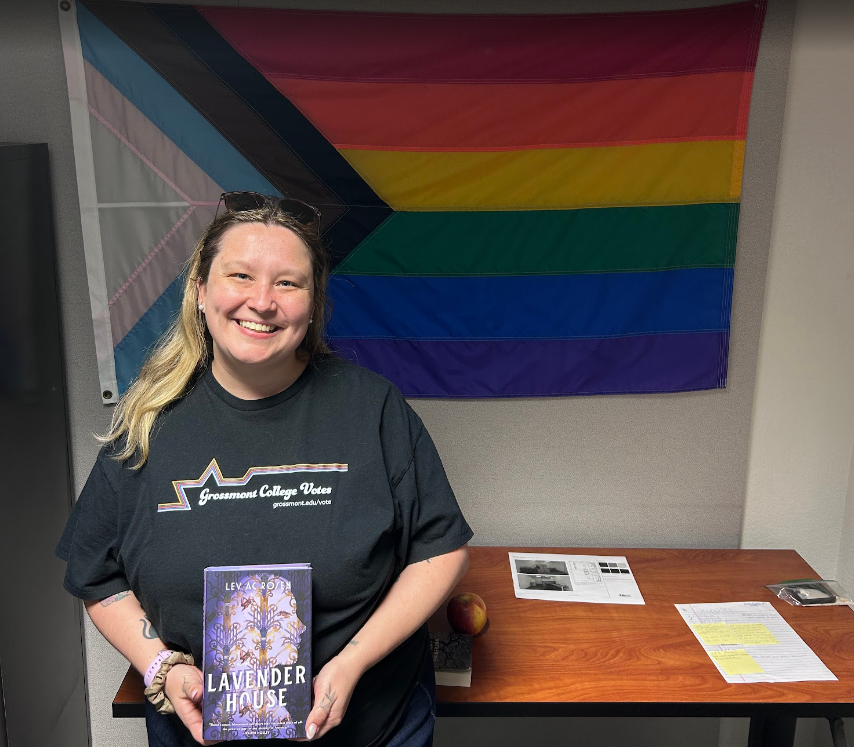
To not forget the severity, Grossmont College applied for a grant through the American Library Association, with the guidance and dedication of librarian Nadra Farina-Hess, to raise awareness of WWII and the violence it inflicted.
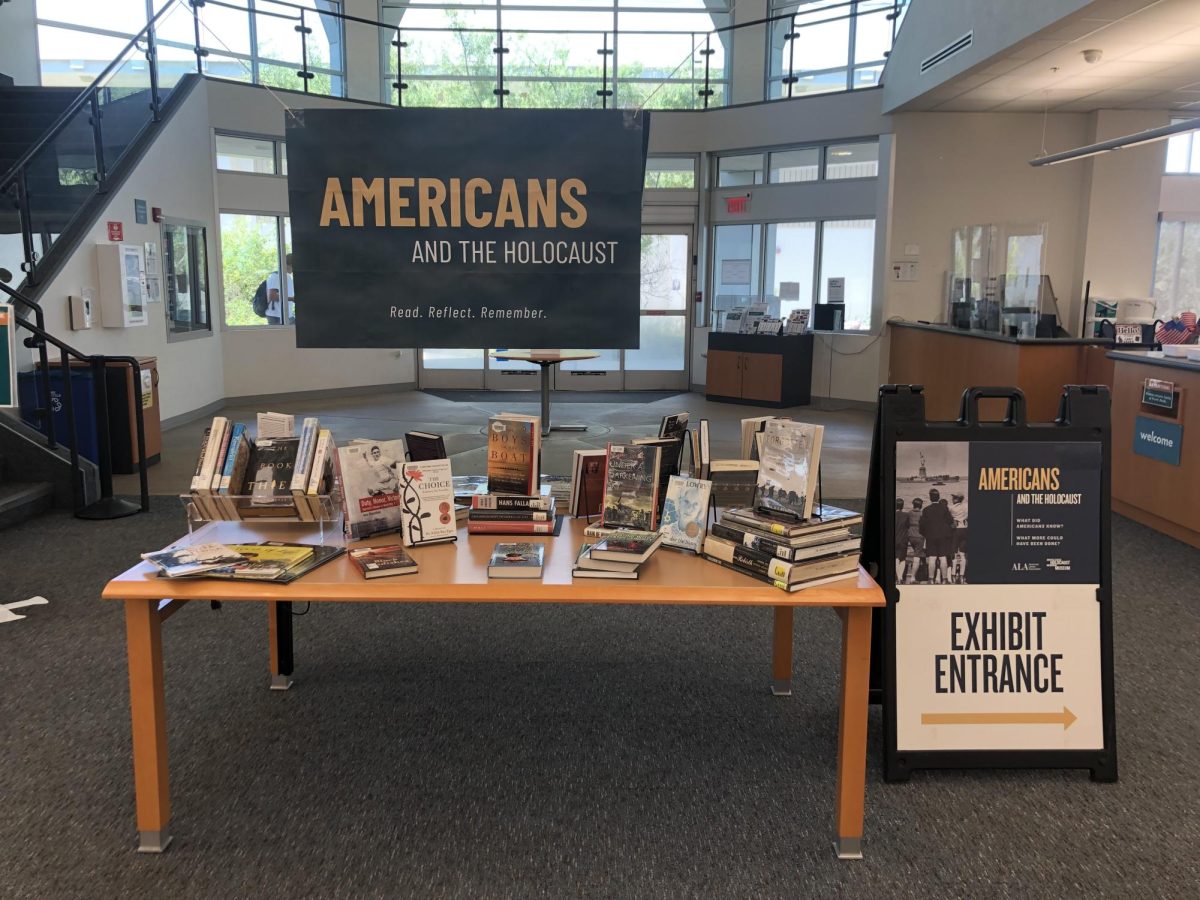
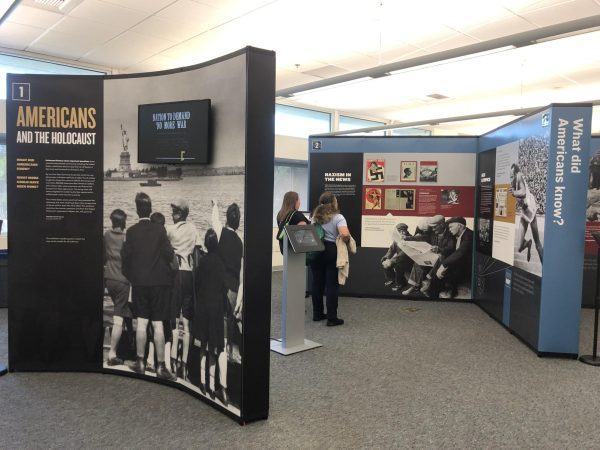
The Americans and the Holocaust Traveling Exhibition visited 50 libraries across the United States over a set period. Grossmont’s library was the only institution in California to host the program during its scheduled run from April 14 to May 21.
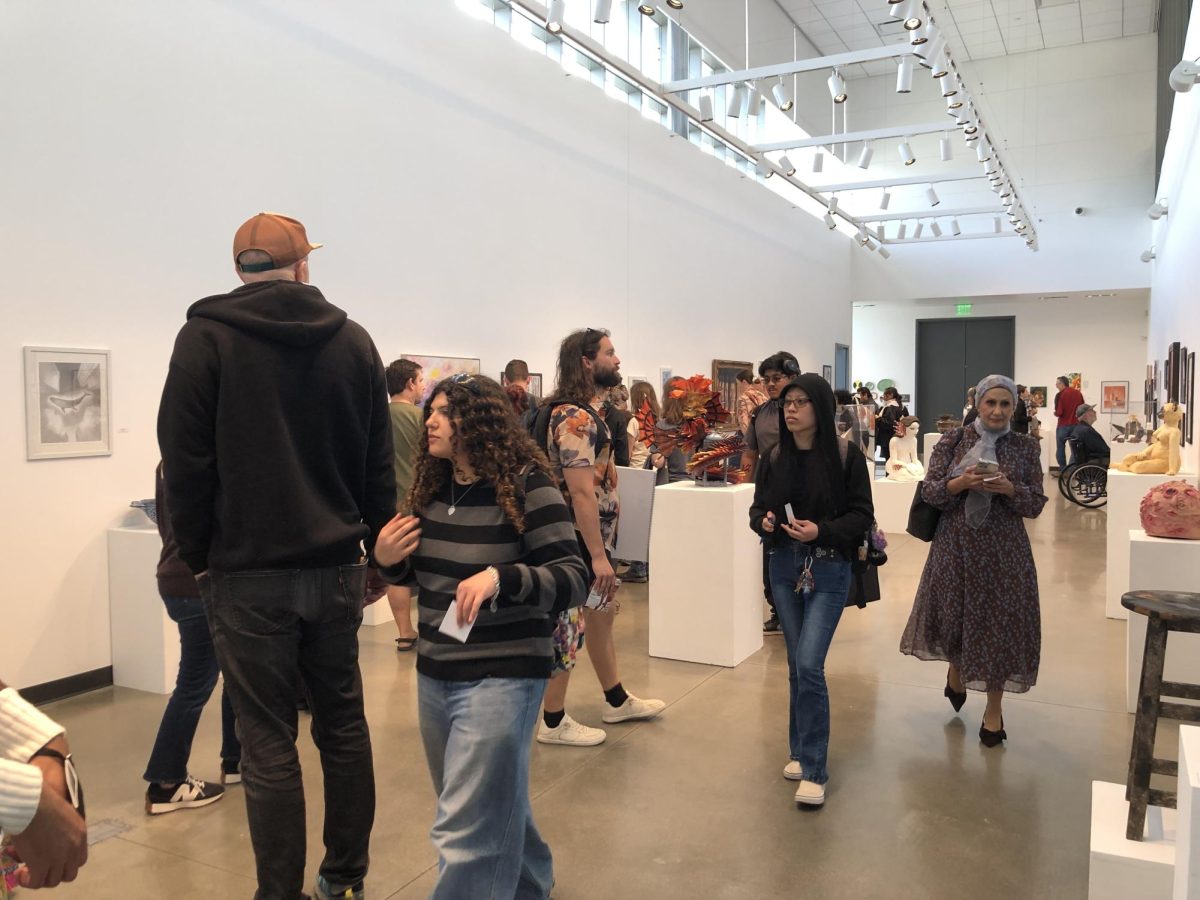
The display was housed in the library and features events from lecture presentations to recital performances. These showcases emphasize survivors and permanent scars, highlighting the United States’ response.
“Where were we as a country?” Farina-Hess said. “Where were we as individuals, as institutions in government? And what did we do in response to Nazi persecution, and what did we do during World War II?”
This resource is for the benefit of students, exposing truths in the past. Engineering major Martiza Servin, admitted to her lack of knowledge on the topic and expressed her frustration with the prevalence of censorship.
“It’s very important to learn about,” Servin said. “Deleting history. I think that’s terrible,” she added.
Japanese Internment Camps
One historical detail often overlooked is the attempt to create concentration camps for Japanese Americans.
The Americans and the Holocaust Series provided a lecture on the topic titled, “The U.S. Incarceration of Japanese Americans: Race, Nationality and Dignity in a Wartime Democracy,” led by Dr. Peter Utgaard.
Art major student Ryan Moore attended Grossmont High School, a site where Japanese Americans were historically ripped from the classroom and imprisoned behind barbed wire, living in camps with little livable resources; a cruel reflection of Germany’s prejudice. Moore said, “Just because you look a certain way, you’re taken somewhere.”
Following the bombing of Pearl Harbor in 1941, the United States became extremely cautious of any person that was Japanese. California politicians wanted to create an exclusion zone in response.
The famous author Dr. Seuss was heavily involved in anti-Japanese sentiment. Gen. DeWitt was also extremely against Japanese Americans and referred to them as the “enemy.”
Mandatory relocations were issued for Japanese Americans to leave the exclusion zone, which encompassed nearly the entirety of California. Japanese Americans were forced to evacuate within 48 hours.
Farina-Hess said: “You see this happening again today. You see this with ICE detention centers, and we were able to talk about those parallels, and how we should not be repeating this negative part of history.”
Moore criticized the U.S. response and the ultimate nuclear strikes of both Hiroshima and Nagasaki. Moore said that the United States “allowed the Klan to run through black neighborhoods, and bomb them, and set them on fire, and take them out, and we’re crying about Pearl Harbor.”
Jim Crow Inspires Nazism
Natalye Harpin, a faculty member for the African American Studies in the Cross-Cultural Studies at Grossmont College, delivered the “The Intersection of Jim Crow & Nazi Germany” lecture about how Nazi oppression found inspiration from the racial abuse by the United States.
Harpin taught that Nazi Germany took a page out of America’s book, specifically the Jim Crow laws. These legal statutes were put in place to continue the oppression of African Americans even after the emancipation, which abolished slavery, following the Civil War, which spanned from 1861 to 1865.
Germany noted the way African Americans were segregated from enjoying the same restaurants as White people, restricting access to public places like parks for only certain times, and other oppressive rules that stripped away rights to a high quality of life.
The Jim Crow laws became the base for Germany’s own set of racially charged regulations known as the Nuremberg Laws. Many of these laws resemble the discrimination set by Jim Crow laws, except the victims were mainly Jewish people.
Additionally, Harpin wrote a San Diego Union-Tribune article on the matter in 2023 titled “Nazi Germany borrowed from racist ideology from Jim Crow South; prof shares experiences of Black Germans.”
Harpin was quoted as saying that the Nazis “liked the fact that the United States sort of got away with having a sterling reputation of freedom and liberty on its public face, but behind the scenes were really practicing a lot of the same ideologies among the marginalized communities here.”
She added that “While fighting Nazis, they (United States) allowed the Klan to blow up churches.”
Nazism and the Church
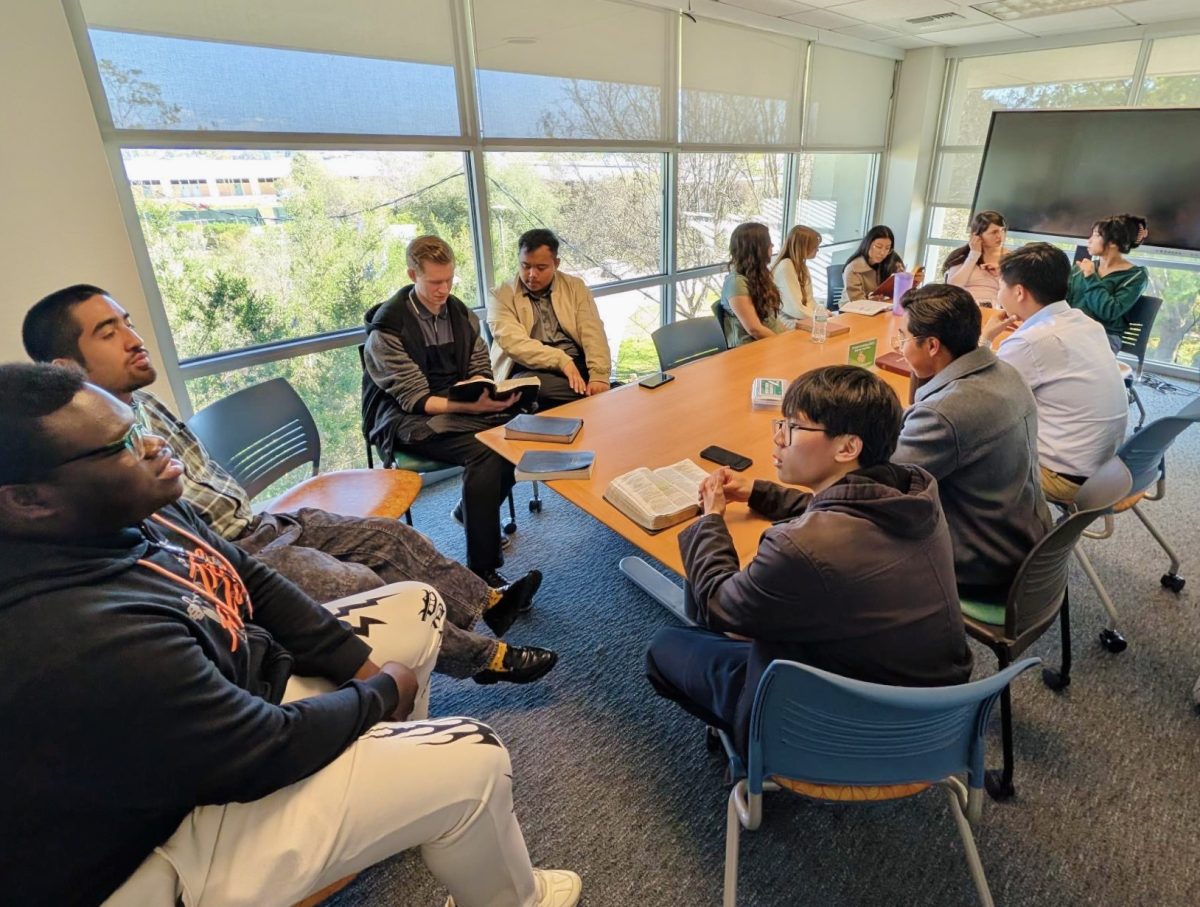
In another series of lectures led by Professor Veronica Bale, a lesson and discussion on how the German church responded to Nazism.
Bale makes numerous references to a Lutheran named Martin Niemoller, whose views on the new German government quickly shifted after he was imprisoned for “treasonable statements.” Niemoller became controversial in Germany since he supported the Nazi regime prior to his arrest.
Following the defeat of Nazi Germany, Niemoller wrote a poem titled “First They Came.” He explains how socialists, trade unionists, and Jews were targeted, yet he did nothing because he was not targeted. The poem ends with: “Then they came for me—and there was no one left to speak for me.”
Farina-Hess takes this as an invitation to do better. “That poem is a bridge, a bridge from the history that we’re learning here to ‘what do I need to do today to stand up for others in a socially unjust world?’”
According to the United States Holocaust Memorial Museum website, Niemoller played a prominent role in the Confessing Church. This was a Protestant resistance movement where the Old Testament was removed along with any mention of Jews or Judaism, and swastikas replaced crosses.
The antisemitic church believed that “Jesus was weak.” The church adopted a belief known as Positive Christianity.
Bale explained that this meant “Christians have the freedom of religion as long as their practices do not intersect or become more powerful than the German race.” It was an ideology of “race over grace,” polarizing ethnic and religious Jews.
The church dictated that Jews could not be baptized, remaining unclean and therefore unable to have the rights of an Aryan.
“Aryan” is a term created to identify who was and was not German. “Non-Aryans” were mostly Jewish or Romani people.
Expression and Culture
Despite the Nazi effort to eradicate people of Jewish and Romani backgrounds, there were efforts to maintain culture and help it to flourish among those who did survive.
And flourish it did, as seen by the performance given at “From the Holocaust to Hope.”
The recital featured live music and dance from Yale Strom & Hot Pstromi, as well as from the LITVAK Dance Company and the Grossmont College Dance Department. “From the Holocaust to Hope” was open to all.
Farina-Hess gave a speech before the show started and said, “Klezmer music and Jewish dance traditions are living expressions of community life, joy, grief, memory, and endurance.”
Not only was Jewish music shared, but also that of Romani origins, as they were persecuted, too.
The performance included poems as well as brief expositions on the heart and impact of these lyrical works. Grossmont’s dance instructor, Nancy Boskin-Mullen, choreographed “What Became,” which was dedicated to her roots as she is a second-generation Jewish American.
The performance expresses how Boskin-Mullen’s grandparents fled from Europe to escape the concentration camps and made a home in the United States. In the program, it was written that her aim was to “add a tangible sense of humanity to our collective understanding of the past, as we work towards a future free of division and hatred.”
Conclusion and Looking Ahead
While the Americans and the Holocaust Traveling Exhibition had a temporary stay at Grossmont’s campus, the official Museum in Washington, D.C., remains year-round. The traveling exhibition helped spark interest in further investigation.
Servin said, “I would love to go to Washington.” After reflecting on the past and looking at the present, Servin added that “I feel like we should learn more about propaganda in our education system, like being able to detect it.”
Farina-Hess helped the library cultivate a section that focused on WWII themes. She said, “We have the Diary of Anne Frank there, and fortunately, somebody has checked it out.”
She continued, “That was one of the goals of the exhibit, as well, to increase our circulation of books that are related to history.”
Many hands came together to make this exhibit possible, in large part thanks to the faculty’s collaboration and creativity at both Grossmont and Cuyamaca College. Other key contributors include the Butterfly Project and the Legacy of Light Goldberg Institute for Holocaust Education.
Resources such as the exhibit serve as additional sources of information for students, faculty, and others beyond campus to learn from.
Farina-Hess said, “That’s why we brought the exhibit here, to support learning, to remember the past, and just move forward to stand up for others. We’re going to show you how.”
Looking ahead, the library is planning another display through the summer and fall semesters to frame the Neimoller poem, and there are ongoing discussions about providing resources to connect with social justice causes in the library.
To learn more about America’s involvement in the Holocaust, visit the official United States Holocaust Museum’s website, ushmm.org,